
Why Posture Matters: The Science of Spinal Alignment & How Physiotherapy Helps
Spinal Alignment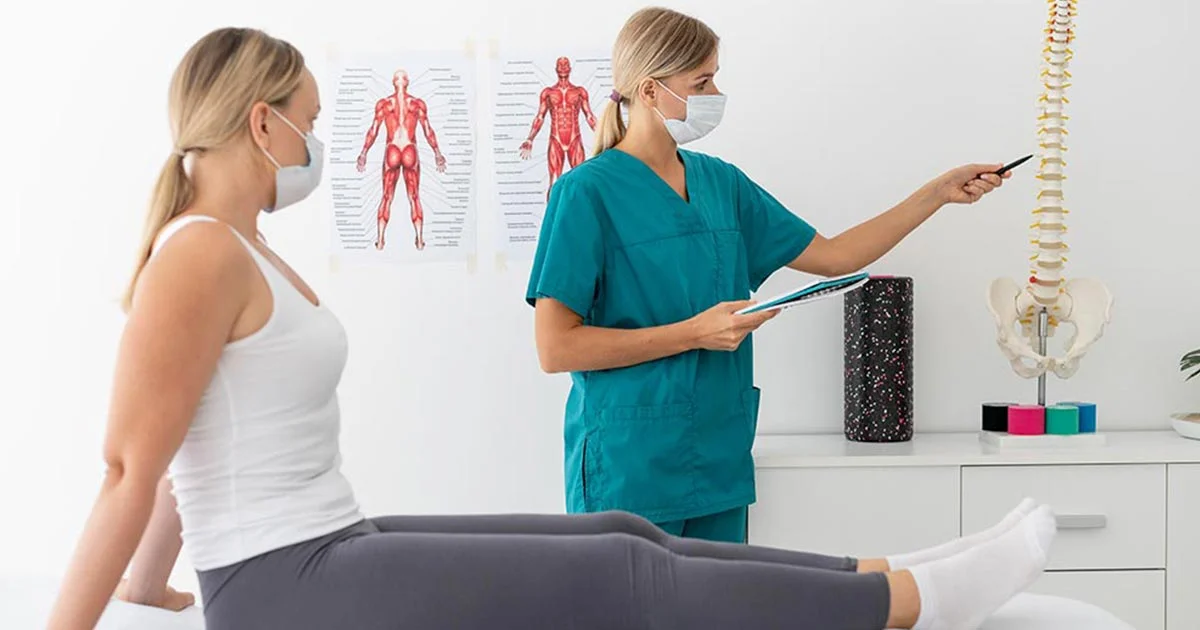
The Problem Most People Ignore Until It's Too Late
Most people don't think about their posture until something hurts.
By then, the damage has often been building for months — sometimes years. A tight neck that won't release. A lower back that aches by mid-afternoon. Headaches that seem to have no clear cause. These aren't random complaints. In many cases, they share a single root: poor spinal alignment.
Posture is not vanity. It is not about looking confident in photographs. It is the mechanical baseline from which every movement in your body operates. When that baseline is off — even slightly, even subtly — the consequences ripple through your muscles, joints, nerves, and over time, your quality of life.
Understanding why posture matters, what poor alignment actually does to your body, and what evidence-based intervention looks like is the first step toward genuine, lasting change.
What "Good Posture" Actually Means: The Neutral Spine Explained
The term "good posture" is often reduced to a vague instruction: shoulders back, chin up, don't slouch. That framing is both incomplete and, for many people, counterproductive — because forcing an artificial position without addressing the underlying muscular imbalances that caused the problem simply trades one form of strain for another.
What clinicians actually aim for is neutral spinal alignment: the position in which the spine's three natural curves — the cervical lordosis (neck), thoracic kyphosis (upper back), and lumbar lordosis (lower back) — are maintained without exaggeration or collapse. In this position, compressive forces are distributed evenly across intervertebral discs, muscular effort is minimised, and the nervous system is unimpeded.
In standing, neutral alignment looks like this:
- Ears sitting directly over the shoulders, not jutting forward
- Shoulder blades lightly retracted and depressed — relaxed, not braced
- The ribcage neither flared nor compressed
- A gentle inward curve at the lumbar spine, not a flat or exaggerated arch
- Hips level, pelvis in a neutral tilt
- Knees soft, weight distributed evenly across both feet
In sitting, neutral alignment requires:
- Feet flat on the floor or supported on a footrest
- Knees at approximately 90 degrees, hips level or slightly elevated
- Lumbar curve supported — by a chair's backrest, a lumbar roll, or a properly set ergonomic chair
- Head balanced directly over the shoulders, not craning toward a screen
- Forearms roughly parallel to the desk surface, wrists uncocked
Most people can approximate this position for a few minutes. The clinical challenge is that sustained, habitual neutral alignment requires adequate muscular endurance in the deep stabilisers — muscles that, in sedentary populations, are frequently inhibited, weak, or simply untrained.
The Biomechanics of the Spine: Why Alignment Is a Structural Issue, Not a Behavioural One
The human spine is one of the most sophisticated load-bearing structures in the natural world. Its 33 vertebrae — stacked, cushioned by intervertebral discs, and laced together by an intricate network of ligaments, tendons, and muscular layers — are engineered to absorb shock, protect the spinal cord, and enable an extraordinary range of movement while simultaneously supporting the weight of the head and torso.
What makes the spine so effective is also what makes it vulnerable: it operates as a kinetic chain. That is, it does not function in isolation. The position of the pelvis influences the lumbar curve. The lumbar curve influences the thoracic curve. The thoracic curve influences the cervical spine. A misalignment at one level propagates through the entire system.
This is why a tight hip flexor — the result of prolonged sitting — can contribute to lower back pain. Why weak deep cervical flexors can lead to headaches. Why a stiff thoracic spine can place excessive demand on the shoulder joint during overhead movements. The spine does not have isolated problems; it has systemic ones.
When alignment is maintained, forces are shared intelligently across the system. When alignment is lost, specific structures are overloaded: discs bear asymmetric compressive forces, facet joints are loaded at angles they were not designed to sustain, and muscles work overtime to compensate for positional dysfunction — until they fatigue, and pain begins.
The Real Cost of Poor Posture: Beyond Back Pain
Chronic postural dysfunction rarely announces itself dramatically. It accumulates. A patient who has spent a decade working at a poorly set-up desk does not typically arrive in clinic describing a single injury. They describe a slow erosion: energy that drains faster than it should, discomfort that has become so familiar they've stopped registering it as abnormal, a sense of tightness or restriction that has quietly narrowed what they feel capable of doing.
The clinical consequences of sustained poor posture are well-documented:
Musculoskeletal: Predictable patterns of muscle imbalance develop — some muscles chronically shortened and overactive (pectorals, hip flexors, upper trapezius, suboccipitals), others lengthened and inhibited (deep cervical flexors, mid and lower trapezius, gluteals, deep core stabilisers). This imbalance accelerates wear on spinal discs and facet joints, increases the risk of degenerative change, and creates the conditions for acute injury.
Neurological: Forward head posture and thoracic kyphosis can alter the mechanics of the brachial plexus and contribute to symptoms of nerve tension — tingling, numbness, and radiating pain into the arms. Suboccipital muscle tightness compresses the greater and lesser occipital nerves, a direct contributor to cervicogenic headache.
Respiratory: A collapsed thoracic posture mechanically restricts diaphragmatic excursion and chest wall expansion. Studies have demonstrated measurable reductions in forced vital capacity and peak expiratory flow in individuals with marked thoracic kyphosis — meaning that poor posture quite literally reduces the efficiency of every breath.
Psychological: The posture-mood relationship is bidirectional. Sustained upright, open posture has been associated with reduced cortisol, improved affect, and greater self-reported confidence. Conversely, chronic pain and the postural collapse that often accompanies it are strongly correlated with anxiety and depression — a cycle that, without intervention, tends to reinforce itself.
Text Neck and the Postural Crisis of the Digital Age
No modern discussion of posture is complete without addressing what has become one of the defining musculoskeletal concerns of the past two decades: the structural impact of sustained screen use.
The physics are stark. The adult head weighs approximately 10–12 lbs in a neutral, balanced position. As it moves forward — even incrementally — the effective load on the cervical spine increases dramatically. At 15 degrees of forward flexion, the cervical spine bears approximately 27 lbs of force. At 45 degrees — a common angle when looking at a phone held in the lap — that figure rises to around 49 lbs. At 60 degrees, it approaches 60 lbs.
Now consider that the average person spends 8 to 12 hours per day in front of screens, often with their device positioned below eye level. The cumulative loading on the cervical spine across a single year is staggering — and the adaptive response of the body to that loading is precisely what clinicians now refer to as forward head posture or, in common usage, "text neck."
The structural consequences include:
- Elongation and weakening of the deep cervical flexors
- Shortening and hypertonicity of the suboccipital muscles
- Anterior migration of the cervical vertebrae relative to their ideal position
- Increased compressive loading on posterior cervical structures
- A downstream effect on the thoracic spine, contributing to exaggerated kyphosis and protracted shoulders
Text neck is not a condition that resolves with awareness alone. Once the muscular and structural adaptations are established, they require systematic, progressive rehabilitation to reverse.
Physiotherapy for Posture Correction: What Evidence-Based Treatment Actually Involves
The most important distinction in physiotherapy-led posture correction is this: it is not about telling the body where to be. It is about restoring the capacity to get there and stay there.
A thorough physiotherapy assessment evaluates the entire postural chain — not just the area of chief complaint. Where is the thoracic spine restricted? Which hip flexors are short? Is the patient's deep core functional under load? Are the mid-scapular stabilisers strong enough to maintain retraction over the course of a working day? These findings shape a treatment programme that is specific, progressive, and grounded in the individual's daily demands.
Clinical tools within posture rehabilitation typically include:
Manual therapy — Joint mobilisation and manipulation to restore movement in restricted spinal segments. Soft tissue techniques to reduce hypertonicity in chronically shortened muscles. Neural mobilisation where nerve tension is contributing to symptoms.
Motor control and stabilisation training — Reactivating inhibited muscles before loading them. The deep cervical flexors, the transversus abdominis, and the lower trapezius are common targets. Exercises such as deep neck flexor endurance work, dead bugs, and scapular setting drills address the stabilisation deficits that underlie most postural dysfunction.
Progressive loading — Once stabilisation capacity is restored, progressive resistance training of the posterior chain (thoracic extensors, mid trapezius, rhomboids, gluteals) builds the endurance needed to maintain alignment through a full working day.
Mobility and flexibility work — Systematic stretching of the hip flexors, pectorals, and suboccipitals addresses the mobility restrictions that make neutral alignment mechanically inaccessible — regardless of how motivated the patient is.
Ergonomic and lifestyle intervention — Screen height, chair set-up, monitor distance, the position of a keyboard, the height of a standing desk — each of these variables, addressed correctly, removes the postural stressor that may be perpetuating the problem. Without this component, even the most effective rehabilitation is working against the wind.
Movement pattern retraining — How a person bends, lifts, reaches, and carries matters as much as how they sit. Identifying and correcting dysfunctional movement strategies prevents re-injury and builds postural competence across the full range of daily tasks.
Foundational Exercises for Spinal Alignment
The following exercises represent core components of posture rehabilitation programmes. They should be performed under the guidance of a qualified physiotherapist, who can confirm technique and appropriate loading for your individual presentation.
Deep cervical flexor activation (chin tucks): Lying supine or standing against a wall, gently draw the chin back — not down — to elongate the back of the neck. The movement is subtle. Hold for 5–10 seconds. This targets the longus colli and longus capitis, the primary deep neck stabilisers, which are almost universally inhibited in patients with forward head posture.
Thoracic extension over a foam roller: Positioned across the upper and mid thoracic spine, this mobilisation directly counteracts the compressive effects of prolonged flexion. Gentle and systematic, it restores segmental mobility critical for shoulder function and cervical alignment.
Wall angels: Standing with the back flat against a wall, arms in a goalpost position, slowly slide the arms overhead while maintaining contact between the back of the hands, elbows, and wall. A deceptively demanding drill that trains scapular upward rotation and thoracic extension simultaneously.
Bird-dog: From a four-point kneeling position, extend the opposite arm and leg while maintaining a neutral lumbar spine. A foundational deep stabilisation exercise that integrates core control with limb movement — a demand pattern that closely mirrors real-world activity.
Hip flexor stretch (kneeling lunge position): With one knee on the floor, gently shift the pelvis into posterior tilt before moving forward into the hip flexor stretch. This targeting of the anterior hip significantly reduces anterior pelvic tilt, one of the most common contributors to lumbar pain and reduced gluteal function.
Posture Is a Long Game — And That Is Precisely the Point
There is no single session, device, or exercise that corrects years of postural adaptation. The body changes slowly, and the changes, when made correctly, are durable.
The patients who achieve the most meaningful and lasting outcomes are those who understand that posture correction is not a treatment they receive, but a capacity they rebuild. Physiotherapy provides the assessment, the clinical direction, and the therapeutic tools. But the transformation happens through consistency — through the daily accumulation of better movement choices, strengthened stabilisers, and an environment designed to support rather than undermine alignment.
The spine rewards this investment generously. Reduced pain, improved energy, a wider range of effortless movement, and the quiet confidence of a body that functions well — these are the returns on a commitment to spinal health.
Ready to Reclaim Your Posture?
If you're experiencing chronic back or neck pain, persistent headaches, or the fatigue of a body working harder than it should, a physiotherapy assessment is the logical starting point.
Our clinicians will identify the specific structural and muscular factors driving your symptoms, build a treatment plan tailored to your body and your life, and give you the practical tools to achieve lasting improvement.
Book your postural assessment today.
Your spine has the capacity to recover — it simply needs the right support to do so.